





As we head into 2026, pool maintenance is shifting rapidly toward wireless automation. Cordless robotic pool cleaners have evolved from niche gadgets into powerful, essential tools for homeowners. These battery-operated devices eliminate the hassle of tangled cords and manual labor, offering a streamlined "set it and forget it" solution. This guide covers the key benefits, operational mechanics, and essential features you need to know to choose the right wire-free cleaner for your pool this year.
1.How Cordless Robotic Pool Cleaners Work
The efficiency of a cordless robotic pool cleaner comes from its self-contained engineering. While corded robots receive continuous power from an external source, cordless units carry their own power and navigation systems on board.
Battery and Propulsion
These units are powered by waterproof, high-capacity rechargeable batteries. This internal power drives the impeller for suction and the tracks or wheels for movement. Current battery technology allows these machines to run for 90 to 180 minutes, providing sufficient time to clean standard residential pools thoroughly.
Smart Navigation
Without a cord to guide or restrain them, the robots rely on internal sensors. Gyroscopes and accelerometers track orientation and speed. Advanced models use algorithms to "map" the pool, detecting walls and calculating efficient paths to ensure full coverage without wasting battery power on repeated areas.
A deeper technical look at motors, filtration systems, and navigation logic used in modern robotic cleaners. You can check: How Do Robotic Pool Cleaners Work? The Magic Explained
2.The Benefits of Going Cordless Robotic Pool Cleaner
The migration to battery-powered units is driven by several distinct advantages that only a wire-free design can provide.
Eliminating the Tangle
The most significant benefit is the absence of a cable. Corded cleaners often get twisted, limiting their reach and requiring manual untangling. A cordless unit moves without restriction, reaching every corner of complex pool shapes without being held back by a snagged wire.
Safety and Aesthetics
A pool deck covered in wires creates a tripping hazard for children and pets. Removing the tether makes the area safer. Additionally, a cordless robot keeps the pool looking clean and uncluttered while it operates, without unsightly cables floating on the surface.
Energy Efficiency
Modern cordless cleaners use advanced Lithium-ion batteries. Since they operate independently of your home's electrical grid and do not require your energy-hungry main pool pump to run, they often result in lower overall electricity costs compared to traditional hydraulic cleaning systems.
The advantages of robotic pool cleaners compared to other traditional pool cleaners are also explained in detail. A side-by-side comparison of robotic, suction-side, and pressure-side cleaners in terms of efficiency, cost, and maintenance make you know more benefit about robotic pool cleaner. Please check: Robotic vs. Suction vs. Pressure Pool Cleaners: Which is Best for You?
3.Cordless vs Corded Robotic Pool Cleaners in US
| Comparison Factor | Cordless Robotic Pool Cleaner | Corded Robotic Pool Cleaner |
|---|---|---|
| Power Source | Built-in lithium-ion battery | External power supply via floating cable |
| Runtime | 90–180 minutes per charge (sufficient for most US residential pools) | Unlimited runtime as long as power is connected |
| Setup Time | Under 1 minute: charge, place in pool, start | Longer setup: connect to GFCI outlet, manage cable placement |
| Ease of Use | Very high – true “set it and forget it” operation | Moderate – cable monitoring and occasional untangling required |
| Mobility & Coverage | No cable restrictions; smooth movement in freeform pools | Cable can limit reach and cause missed areas in complex pool shapes |
| Navigation Efficiency | Relies on onboard sensors and intelligent path optimization | May rely on cable length and random or semi-random movement |
| Safety (US Households) | No live power connection during operation; safer for children and pets | Requires GFCI outlet and exposed cable near water |
| Pool Deck Aesthetics | Clean, uncluttered appearance | Visible floating cable and deck wiring |
| Maintenance Concerns | Battery care required; battery lifespan ~3–5 years | Cable wear, swivel failure, power supply replacement over time |
| Energy Consumption | Energy used only during charging; no pump dependency | Continuous grid power draw during operation |
| Storage & Portability | Compact, lightweight, easy to store indoors | Bulkier due to cable; careful storage needed to avoid kinks |
| Ideal Pool Size | Small to medium residential pools (up to ~40 ft / 12 m) | Very large residential or semi-commercial pools |
| Best For | Busy US families prioritizing convenience and safety | Users needing extended or continuous cleaning cycles |
| Overall User Experience (2026) | Modern, streamlined, low-effort | Reliable but less convenient and more hands-on |
Cordless pool robots are becoming very popular in 2026, but it’s important to see how they compare to traditional corded cleaners. The best choice depends on things like how deep your pool is and how often you clean it.
To help you decide, we created a simple comparison guide: Cordless Pool Cleaner vs Corded: Which Offers True Freedom?
4.Choose Based on Your Pool Specifications
Before buying a cordless robotic pool cleaner, you should first look at your pool itself. Pool size, surface material, shape, and features like steps all affect which robot will work best.
A cordless robot pool cleaner that’s perfect for a small rectangular pool may struggle in a large freeform pool with steps. Choosing the right cleaner based on your pool’s setup helps ensure better coverage, fewer missed spots, and less frustration.
Pool Cleaner Selection Guide by Pool Type
|
Pool Feature |
Your Pool Type |
What to Look For in a Robot |
|
Pool Size |
Small (Up to 8m) |
Short runtime (60–90 mins), compact size, fast charging, easy to lift |
|
Medium (8–12m) |
At least 2 hours of runtime, good wall-climbing ability |
|
|
Large (12m+) |
Large battery, wide cleaning path, strong suction to finish the job in one cycle |
|
|
Pool Surface |
Concrete / Pebblecrete |
Strong traction and stiff brushes to remove algae and fine dust |
|
Fiberglass |
High-grip PVC or foam brushes so the robot doesn’t slip on smooth walls |
|
|
Vinyl Liner |
Soft rollers to avoid scratching or lifting the liner |
|
|
Pool Shape |
Rectangular |
Basic navigation is usually enough; straight lines and corners are easy |
|
Freeform / Curved |
Advanced navigation (gyroscope or smart sensors) to avoid getting stuck |
|
|
Steps & Slopes |
Steps, ledges, sloped floors |
Active buoyancy control to prevent tipping or flipping on climbs |
Expert Advice: Don't overlook your pool's surface! Whether you have tile or vinyl can make or break a robot's climbing performance. Read our guide: Finding the perfect match for your pool surface
5.What to Look for When Purchasing a Cordless Robotic Pool Cleaner?
Not all cordless robots offer the same performance. When shopping in 2026, focus on these critical specifications.
① Battery Life and Charging Speed
Runtime is the most important factor. A robot with a short battery life cannot clean a large pool effectively. Look for a minimum of 90 minutes of operation. Equally important is charging speed; top-tier models can recharge in under 3 hours, making them ready for a second cycle quickly.
②Suction Power and Filtration
Check the flow rate and filter type. Higher flow rates generally indicate better suction. Ensure the filter density matches your needs—fine filters for dust and algae, or large baskets for leaves.
③Navigation Technology
Entry-level models often move randomly, which can lead to missed spots. Look for models with systematic navigation or path planning. These units clean in structured patterns, ensuring the entire pool is covered efficiently.
④Wall Climbing Ability
Confirm that the model is rated for wall and waterline cleaning. Many budget options are "floor only." Since the waterline often accumulates the most grime, a robot that can climb is a worthwhile investment.
⑤Smart Features
For superior performance, the cordless pool cleaner features Intelligent Path Optimization and a "One Charge, Lasts All Week" battery system, ensuring efficient, comprehensive cleaning without frequent recharging.
About Robotic Pool Cleaner navigation technology, wall climbing ability, and more features, you can check the Best Robotic Pool Cleaner Features: Smart Navigation, Waterline Scrubbing, and Energy Efficiency Explained
Which Features of a Robotic Pool Cleaner Can Remove Leaves and Sand? More detail you can check: How to Choose a Pool Robot Cleaner for Cleaning Leaves and Sand?
6.How to Use a Cordless Robotic Pool Cleaner
①Place the robot in the pool
Hold the cleaner by the handle and lower it gently into the water. Tilt it slightly to release trapped air so it can sink properly.
②Prepare the battery
Check that the battery is ready.
③Start the cleaner
Plug the unit into a GFCI outlet or press the start button on a cordless model. Select a cleaning mode if your cleaner offers one.
④Let it run
A normal cleaning cycle takes about 2–3 hours. It’s best to stay out of the pool while the robot is working.
If you would like to learn more details about using a robotic pool cleaner, we recommend checking out How to Use Robotic Pool Cleaner. It provides more tips to know before and after use.
You can also watch the iGarden robotic pool cleaner how-to video to learn more.
7.Use a Cordless Robotic Pool Cleaner in Different Situations
Using a battery-operated cleaner is straightforward, but different scenarios require slightly different approaches.
Routine Daily Cleaning
For standard maintenance, ensure the filter is clean before starting. Power the unit on, wait for the motor to engage, and drop it in. The robot will handle the floor and walls autonomously. This is perfect for keeping algae at bay during the swimming season.
Post-Storm Cleanup
After heavy rain or wind, your pool may be filled with leaves. In this case, ensure your robot is equipped with a large debris basket rather than a fine filter cartridge. You may need to run two cycles: one to remove the bulk of the debris and a second to scrub fine dust that settled later.
Post-Opening the Pool
After opening your pool for the season, the robotic pool cleaner assists in maintaining a clean pool. Run the robot on a "floor only" cycle first to remove heavy sediment. Clean the filters frequently during this process, as they will clog faster than usual.
8.Guide to Troubleshooting Your Robotic Pool Cleaner
A cordless robotic pool cleaner is designed to make pool clean simple and automatic. However, like any robotic system, performance depends on proper water flow, clean filters, and unobstructed movement. If your cleaner stops, moves abnormally, or does not clean effectively, most issues can be quickly identified and fixed using the guide below.
| Symptom | Most Likely Cause | What to Check | What to Do |
|---|---|---|---|
| Cleaner won’t turn on | No power or dead battery | GFCI outlet (corded) or battery level (cordless) | Reset outlet or fully recharge battery |
| Cleaner starts then stops | Low battery or clogged filter | Battery indicator, filter basket | Recharge and clean the filter |
| Cleaner moves but won’t pick up debris | Blocked or dirty filter | Filter and suction inlet | Rinse filter thoroughly |
| Cleaner is not moving | Impeller or wheels blocked | Impeller, wheels, tracks | Remove hair, leaves, sand, or stones |
| Cleaner moves in circles | One side blocked or cable tangled | Wheels, tracks, power cable | Clear blockage or untangle cable |
| Cleaner won’t climb walls | Weak suction or worn brushes | Filter, brushes, pool walls | Clean filter, replace brushes, brush pool walls |
| Cleaner gets stuck on steps | Buoyancy or pool geometry | Steps, ledges, slopes | Use floor-only mode or reposition robot |
| Cleaner shuts off mid-cycle | Battery depleted or overheated | Battery level, water temperature | Recharge and allow unit to cool |
| Cleaner won’t park at the wall | Low battery or navigation error | Battery status | Recharge and restart cycle |
We also talk more about how to fix common robotic pool cleaner problems. To learn more, you can check out A Step-by-Step Guide to Troubleshooting Your Robotic Pool Cleaner.
9.Maintain Your Robot for Longevity
Proper care of the battery and components is essential for protecting your investment.
Clean the filter basket after every cycle. A clogged filter restricts water flow, forcing the motor to work harder and draining the battery faster. Keeping the filter clean maximizes runtime and cleaning power.
Lithium-ion batteries are sensitive to temperature extremes. Avoid leaving the robot in direct sunlight on hot days when not in use, and do not charge it in freezing conditions. For long-term storage, keep the battery charged at around 50-60% to prevent capacity degradation.
A pool cleaner’s lifespan can vary a lot depending on its type and how it’s used. How long a robotic pool cleaner lasts also depends on things like how well it’s maintained, how often it’s used, and the water quality. To learn more about average lifespan, comparisons between different types, and tips to help your cleaner last longer, check out How Long Do Pool Cleaners Actually Last? Lifespan Guide & Pro Tips.
10. Are Cordless Robotic Pool Cleaners Worth It for US Families?
For many US families, the biggest benefit of a cordless robotic pool cleaner is the time and effort it saves throughout the swimming season. These battery-powered cleaners work on their own, using built-in filters and smart navigation to keep the pool clean with very little manual work. Homeowners no longer need to deal with hoses, rely on the main pool pump, or spend weekends brushing walls and floors. Instead, a cordless robot handles everyday debris, fine dirt, and wall cleaning automatically, making it a smart and practical choice for families who want a safer, easier, and more reliable way to maintain their pool in 2026.
If you want to learn more about the value of robotic pool cleaners, you can visit Are Cordless Robotic Pool Cleaners Worth It for US Families?
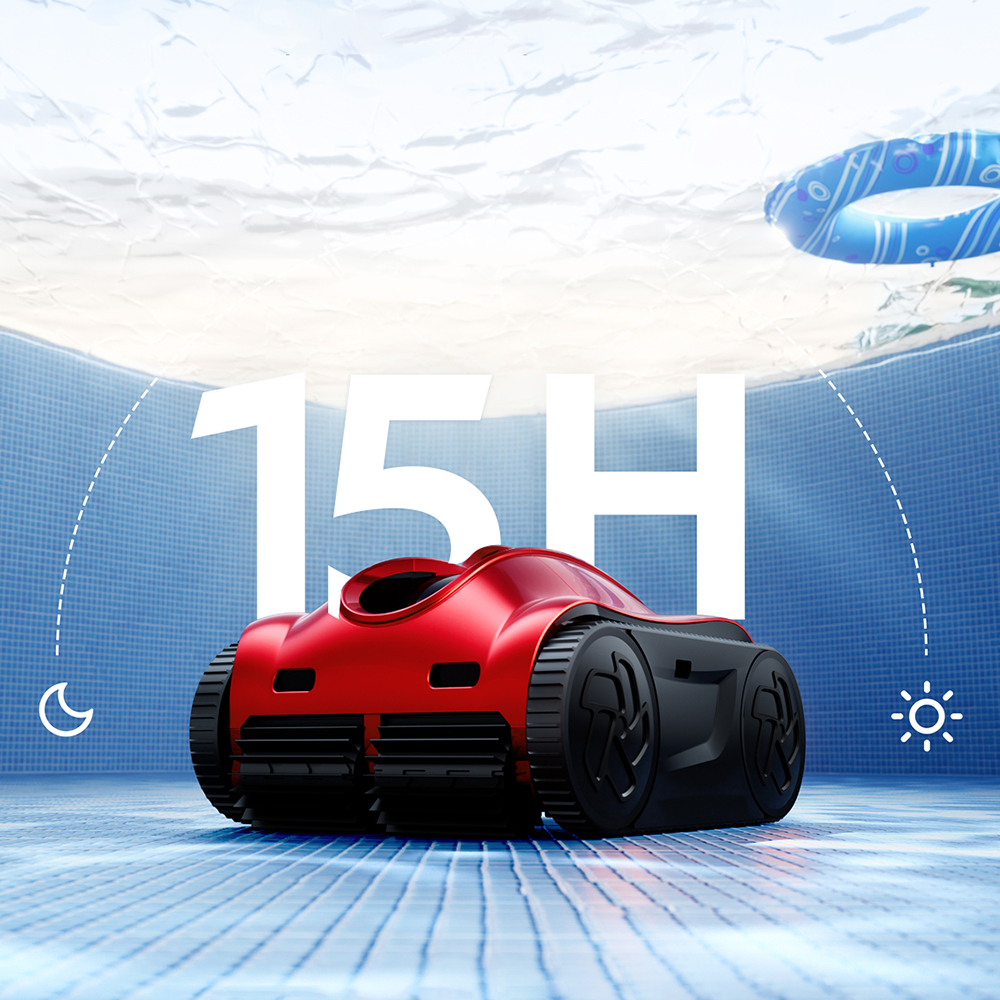
iGarden Cordless Robotic Pool Cleaner K Pro
iGarden Pool Cleaner K Pro, 15H Runtime, Cordless Robotic Pool Vacuum for Inground Pools, Touchscreen, Smart Navigation, 200% Turbo Suction, Ultra-Fine Filtration, Auto-Parking
Buy Now11. Conclusion
Switching to a cordless robotic pool cleaner is a smarter, safer, and easier way to take care of your pool. Without a cord, the cleaner moves freely and is simple to use, while still delivering strong cleaning performance. Thanks to improved battery life and smarter navigation, these machines can reliably keep your pool water clean and clear. Choosing a model with long battery life and useful smart features means you can spend more time enjoying your pool instead of cleaning it.
FAQ
How long do the batteries last before needing replacement?
On average, a high-quality lithium-ion battery in a pool robot will last between 3 to 5 years, depending on usage and storage. Eventually, the battery capacity will diminish, requiring replacement of the battery module or motor unit.
Can cordless cleaners handle deep ends and slopes?
Yes. Capable cordless robots are equipped with tracks and sensors designed to navigate deep ends and steep slopes. Ensure the specific model is rated for your pool's depth to guarantee proper sealing and operation.
What happens if the battery dies in the middle of the pool?
Most modern cleaners feature a "self-parking" or "end-of-cycle" protocol. When the battery reaches a low level, the robot automatically navigates to a wall, making it easy to retrieve without entering the water.
Are they safe for vinyl and fiberglass pools?
Yes, but checking the brush type is important. Soft rubber or foam brushes are ideal for smooth surfaces like fiberglass and vinyl to prevent scratching. Hard bristle brushes are typically better suited for concrete or gunite pools.
